
GOT A QUESTION? CALL US: 571-350-0146
Call Our Experts Today!
(571) 350-0146
info@solarguyspro.com
Mon-Sun: 9am-7pm EST
GOT A QUESTION? CALL US: 571-350-0146
Call Our Experts Today!
(571) 350-0146
info@solarguyspro.com
Mon-Sun: 9am-7pm EST

If you’re considering solar power for your RV, cabin, or off-grid setup, one of the first questions that comes to mind is: how many amps does a 100 watt solar panel produce? Understanding this is crucial because it determines how efficiently your solar system can charge your batteries, run your appliances, and ultimately meet your energy needs. Tools like Adobe Express AI presentation maker can even help you visualize these calculations in a clean, easy-to-share format.
A 100-watt solar panel is one of the most popular sizes for portable and residential solar setups because it’s compact, efficient, and versatile. But while “100 watts” tells you how much power the panel can produce under ideal conditions, knowing how many amps it generates helps you calculate your system’s actual capability.
In this guide, we’ll break down the math, show you the formula, include a simple chart, and walk you through real-world examples so you can plan your solar setup confidently.
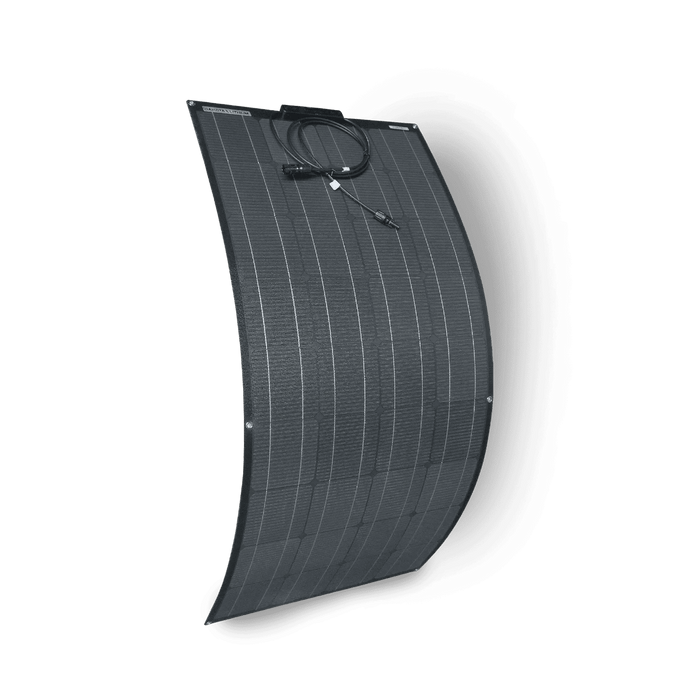
A 100-watt solar panel is rated to produce 100 watts of power per hour when exposed to full sunlight under Standard Test Conditions (STC) — roughly equivalent to 1,000 watts per square meter of sunlight at 25°C.
In simple terms:
Watts (W) measure the total power output.
Volts (V) represent the electrical pressure.
Amps (A) measure the current or the flow of electricity.
Your devices and batteries depend on amps — the actual flow of power — to operate efficiently.
Before diving into calculations, it’s important to understand the relationship between watts, volts, and amps.
The formula is simple:
Amps (A) = Watts (W) ÷ Volts (V)
For example, if your solar panel produces 100 watts at 18 volts (the typical voltage for a 12V system), then:
100 ÷ 18 = 5.55 amps
That means your 100-watt panel will produce about 5.5 amps per hour in ideal sunlight.
Under perfect conditions — such as bright, direct sunlight and a clean, properly angled panel — a 100-watt solar panel produces approximately 5.5 amps at 18 volts.
However, actual performance depends on multiple real-world factors like weather, temperature, shading, and panel orientation. In most cases, you can expect between 4 to 5 amps in good sunlight.
Here’s a quick reference chart to help you understand how voltage affects amperage:
| System Voltage | Power (Watts) | Amps Produced (Approx.) | Example Application |
|---|---|---|---|
| 12V System | 100W | 8.3A | RVs, boats, small cabins |
| 18V System | 100W | 5.5A | Most standard solar setups |
| 24V System | 100W | 4.1A | Larger or hybrid systems |
| 48V System | 100W | 2.0A | Commercial or advanced setups |
This chart shows how higher-voltage systems draw fewer amps for the same wattage — meaning less current but more efficient power transfer.
You can easily calculate how many amps your solar panel will produce using the formula:
Amps = Watts ÷ Volts
Let’s break it down step-by-step with real examples.
If you’re charging a 12V battery, divide 100 watts by 12 volts:
100 ÷ 12 = 8.33 amps
However, most 100-watt panels operate closer to 18V (their maximum power voltage), so actual charging current through a charge controller will be around 5.5 amps.
If you connect a 100W panel to a 24V system, then:
100 ÷ 24 = 4.16 amps
As you can see, the higher the voltage, the fewer amps produced — but the same overall power output.

Even if your panel is rated for 100 watts, that doesn’t mean you’ll always get the full 5.5 amps. Here are the main factors that affect real-world output:
Solar panels perform best under direct, bright sunlight. Cloudy or hazy conditions can reduce efficiency by 50% or more. In winter months or shaded areas, expect significantly lower output.
The tilt and direction of your panel greatly influence how much sunlight it absorbs. For maximum efficiency, angle your panel toward the sun — generally facing true south in the northern hemisphere — and adjust the tilt based on your location’s latitude.
High temperatures can actually decrease solar efficiency. Most panels lose about 0.4% of their power output per degree Celsius above 25°C.
Dust, pollen, or bird droppings on the surface can block sunlight. Keeping your panel clean ensures maximum current output.
Not all 100-watt panels are created equal. Premium models from trusted brands maintain higher efficiency over time, while cheaper ones may degrade faster.
A single 100-watt panel may not power your entire home, but it’s perfect for small off-grid applications. Here’s a look at what you can expect in real-life usage.
A 100-watt panel can produce about 30–35 amp-hours per day (assuming 5–6 hours of peak sunlight). That’s enough to charge:
LED lights
Phones and tablets
A small fan
A portable fridge (for a few hours)
Pairing multiple panels can extend runtime or power larger devices.
If you have a 12V 100Ah battery, it would take approximately 3 days of full sunlight to charge it fully with one 100W panel.
Using 4 x 100W panels (400W total) could produce around 22 amps, enough to charge a 200Ah battery bank for basic off-grid lighting, laptops, and small appliances.
Knowing how many amps a 100-watt solar panel produces helps you plan your solar setup effectively. Here’s why it matters:
Proper System Sizing – Prevent underpowered setups that can’t meet your energy needs.
Battery Compatibility – Ensure your panel can charge your battery efficiently without overloading it.
Inverter Sizing – Match your inverter’s input to the power your panels can generate.
Efficient Energy Management – Balance your solar input with the load you plan to run.
When you understand your amp output, you can confidently determine whether a 100-watt panel is enough — or if you need to expand your array.
If you want to get the most out of your 100-watt solar setup, try these optimization tips:
Use an MPPT charge controller: This maximizes efficiency by converting excess voltage into usable current.
Combine panels in parallel: Connecting multiple 100W panels in parallel increases the total current (amps).
Upgrade to high-efficiency panels: Brands like Anker SOLIX, EcoFlow, and ACOPower (available at SolarGuysPro.com) offer top-tier conversion efficiency.
Keep panels clean and angled properly: Regular maintenance ensures consistent performance.

At Solar Guys Pro, you’ll find a range of 100-watt solar panels and complete solar kits from trusted brands like SunGoldPower, ACOPower, and Anker SOLIX. These panels are designed for portability, durability, and maximum performance — ideal for RVs, boats, or home backup systems.
Whether you’re starting small with one panel or building a complete off-grid system, Solar Guys Pro offers the tools and expertise to help you power your lifestyle with clean, renewable energy.
To sum it up, how many amps does a 100 watt solar panel produce depends on voltage and sunlight conditions — but under ideal circumstances, you can expect about 5.5 amps at 18 volts. Real-world output usually falls between 4 and 5 amps, depending on factors like weather, angle, and efficiency.
Understanding this calculation helps you choose the right number of panels, batteries, and inverters for your energy needs. Whether you’re powering a camper, an off-grid cabin, or a backup setup at home, knowing your amp output ensures you’re prepared and efficient.
Explore a full selection of solar panels, kits, and accessories at SolarGuysPro.com — your trusted source for clean, reliable solar power.
Leave a comment