
GOT A QUESTION? CALL US: 571-350-0146
Call Our Experts Today!
(571) 350-0146
info@solarguyspro.com
Mon-Sun: 9am-7pm EST
GOT A QUESTION? CALL US: 571-350-0146
Call Our Experts Today!
(571) 350-0146
info@solarguyspro.com
Mon-Sun: 9am-7pm EST

When building or upgrading your solar setup, one of the most common questions people ask is: “How many amps does a 200 watt solar panel produce?”
Understanding this is essential when sizing your batteries, charge controllers, and overall system - whether you're powering an RV, off-grid cabin, marine setup, or portable power station.
At Solar Guys Pro, we don’t just explain solar concepts - we help you connect them to real-world systems and products so you can build smarter, more efficient setups.

A 200-watt solar panel converts sunlight into DC electricity using photovoltaic cells. Under ideal conditions, it produces up to 200 watts of power per hour.
Each solar cell inside the panel absorbs sunlight and converts it into direct current (DC) electricity. The amount of current (amps) produced depends on two main factors:
The relationship between power, voltage, and current is defined by a simple electrical formula:
Power (Watts) = Voltage (Volts) × Current (Amps)
So to calculate amps:
Amps = Watts ÷ Volts
This simple formula helps determine how much current your panel can produce depending on system voltage.
To find out how many amps a 200 watt solar panel produces, use this formula:
Amps = Watts ÷ Volts
Let’s go through a few examples:
200W ÷ 12V = 16.6 amps
That means under perfect conditions (full sun and ideal orientation), your 200W panel will produce around 16.6 amps per hour.
200W ÷ 18V = 11.1 amps
This is the more realistic average output you can expect from a 200W solar panel in a typical 12V system.
200W ÷ 24V = 8.3 amps
Higher voltage systems draw lower current for the same power output — which is why 24V and 48V systems are more efficient for larger setups.
Your real output depends on:
A 200W panel rarely produces full rated output continuously - it typically averages 70–85% efficiency in real conditions.
If you get 5 peak sunlight hours:
That’s enough to power:
Yes - if you want reliable 24/7 power.
A solar panel alone only produces energy during the day. A battery stores excess energy for nighttime use and stabilizes voltage output.
For a 200-watt solar panel, a 12V 100Ah deep cycle battery is a great match. It can store enough energy to handle typical daily output without overcharging or deep discharging.
To understand how a 200W panel fits into real systems, here are practical product setups used in RVs, homes, and off-grid applications.
For users who want simplicity and mobility, portable power stations are the easiest entry point.
A strong example is the Jackery HomePower 3000 with SolarSaga 200W Panels, which combines a large 3,050Wh battery with dual 200W solar panels.
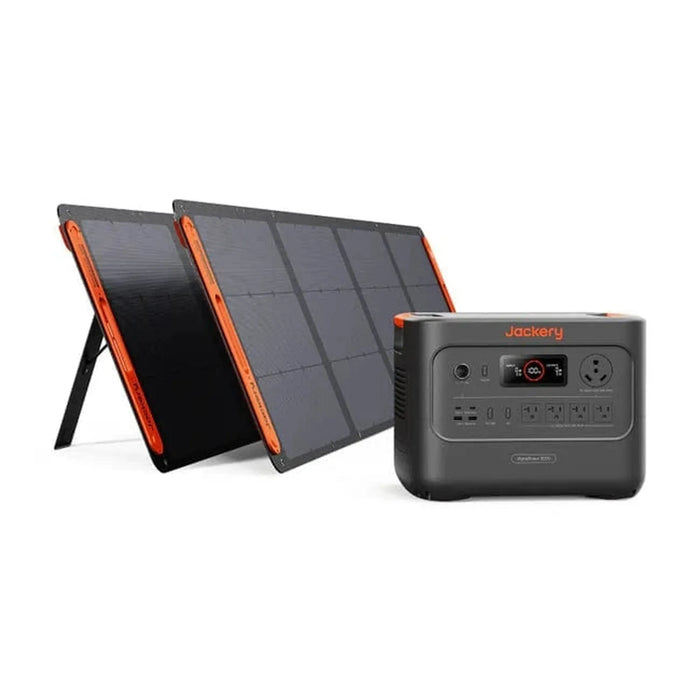
👉 Why it matters for this topic:
Another compact option is the PECRON F1000LFP Portable Power Station 1500W 1004Wh, which is useful for smaller loads like laptops, lights, and communication gear.
👉 Key takeaway:
Even a single 200W panel can significantly extend runtime for portable systems like these.
For more demanding setups (RVs, job sites, or off-grid cabins), modular systems offer better scalability.
The PECRON E1500LFP Portable Power Station with 200W Solar Kit is a great example of a system designed specifically around solar input efficiency.

👉 Why it’s relevant:
This type of system helps users clearly see how panel wattage translates into usable stored energy.
For users scaling beyond a single 200W panel, larger lithium systems become necessary.
The PECRON E3800LFP Portable Power Station 3840Wh demonstrates how multiple solar inputs can scale into full home or RV backup systems.
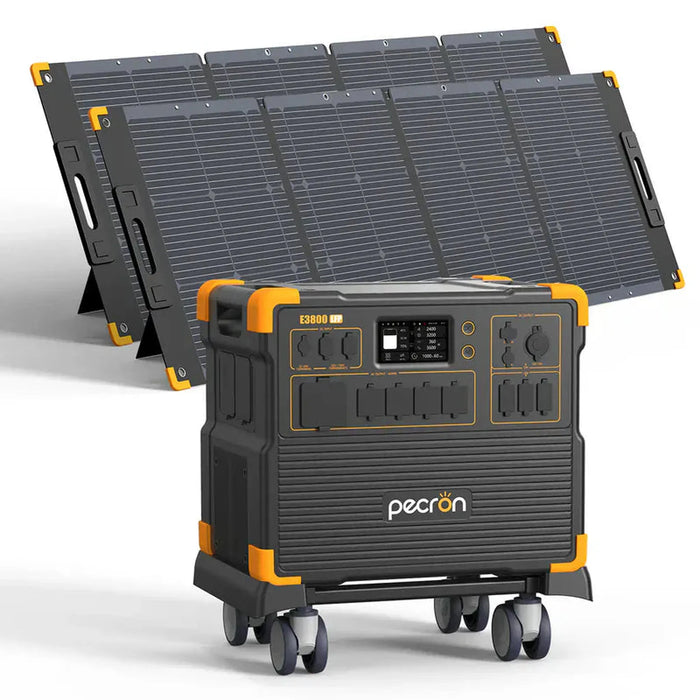
👉 Relevance to this guide:
| System | Battery Capacity | Solar Input Match | Best Use Case | Key Insight |
|---|---|---|---|---|
| Jackery HomePower 3000 + 2×200W | 3,050Wh | Dual 200W panels | Home backup, RV, emergency | Fast charging with dual solar input |
| PECRON F1000LFP | 1004Wh | 200W solar compatible | Lightweight portable use | Entry-level solar storage system |
| PECRON E1500LFP | 1536Wh expandable | 200W–800W solar input | RV, off-grid living | Scales directly with solar input |
| PECRON E3800LFP | 3840Wh expandable | Multi-panel high input | Full off-grid setups | Designed for large solar arrays |
From the comparison above, you can see:
👉 In real terms:
A 200W solar panel is the building block of both portable and off-grid solar systems
A 200W solar panel can power a surprising number of small devices and appliances — but it won’t run everything. Let’s look at a few examples:
| Appliance | Average Power (Watts) | Run Time (hours) using 1,000 Wh/day |
|---|---|---|
| LED Light Bulb (10W) | 10 | 100 hours |
| Laptop | 60 | 16 hours |
| Mini Fan | 40 | 25 hours |
| WiFi Router | 20 | 50 hours |
| Mini Cooler | 80 | 12 hours |
| Small TV | 100 | 10 hours |
For heavier loads and appliances (fridges, AC units, power tools), you’ll need:

To get the most from your solar investment, follow these best practices:
A 200 watt solar panel typically produces 10–16 amps per hour depending on system voltage, making it a powerful and flexible entry point into solar energy systems.
When paired with the right storage solution - like modern lithium or portable power stations - it becomes a key component in both portable and off-grid setups.
Whether you're starting small or scaling up, understanding how amps, volts, and watts work together is the foundation of building an efficient solar system.
Leave a comment