
GOT A QUESTION? CALL US: 571-350-0146
Call Our Experts Today!
(571) 350-0146
info@solarguyspro.com
Mon-Sun: 9am-7pm EST
GOT A QUESTION? CALL US: 571-350-0146
Call Our Experts Today!
(571) 350-0146
info@solarguyspro.com
Mon-Sun: 9am-7pm EST

As solar power systems, RVs, and off-grid setups grow in popularity, knowing how to monitor and maintain battery health is essential. One of the most effective tools for this is the 24V battery voltage chart. It allows you to gauge a battery’s state of charge, troubleshoot system issues, and optimize performance based on the battery chemistry—whether you're using lithium-ion, LiFePO4, or lead acid batteries.
At Solar Guys Pro, our mission is to help you maximize both performance and longevity from your energy storage system. This guide breaks down how to read 24V voltage charts and compares how different battery types behave, so you can make smarter power decisions.

A 24V battery voltage chart maps voltage readings to State of Charge (SOC), helping you understand how much usable energy remains in your battery.
Because different chemistries behave differently, each requires its own chart:
These readings are based on resting voltage, measured after the battery has been idle for several hours.
Voltage is one of the simplest but most powerful indicators of battery health.
Monitoring it helps you:
For example, in high-capacity systems like a full off-grid lithium bank such as the Rich Solar 24V 400Ah 10.2kWh Lithium Battery Bank, voltage monitoring becomes critical because even small inefficiencies can significantly impact total stored energy availability.

Lithium-ion batteries are prized for their high energy density and long cycle life. They are common in solar backup systems, mobile setups, and high-performance applications.
Here’s what a 24V lithium battery voltage chart typically looks like:
|
State of Charge |
Voltage (Resting) |
|
100% |
25.6V – 26.0V |
|
90% |
25.2V |
|
80% |
24.8V |
|
70% |
24.4V |
|
60% |
24.1V |
|
50% |
23.8V |
|
40% |
23.6V |
|
30% |
23.3V |
|
20% |
23.0V |
|
10% |
22.7V |
|
0% |
≤ 22.0V |
Note: Lithium batteries have a flatter voltage curve than other types. That means voltage stays relatively stable across much of the charge cycle and then drops quickly near the end—making a battery monitor with a built-in BMS (Battery Management System) a smart investment.
LiFePO4 batteries are the preferred choice for solar and off-grid systems due to safety, stability, and long lifespan.

These batteries perform especially well in advanced systems like the Epoch 24V LiFePO4 Battery with Heating and Bluetooth, which adds cold-weather charging capability, real-time monitoring, and Victron integration - making voltage tracking even more precise.
Here’s a standard 24V LiFePO4 battery voltage chart:
|
State of Charge |
Voltage (Resting) |
|
100% |
27.2V |
|
90% |
26.6V |
|
80% |
26.4V |
|
70% |
26.2V |
|
60% |
26.0V |
|
50% |
25.8V |
|
40% |
25.6V |
|
30% |
25.4V |
|
20% |
25.2V |
|
10% |
25.0V |
|
0% |
< 24.0V |
Pro tip: Try not to discharge LiFePO4 batteries below 20% too often. It’s safe to go that low occasionally, but repeated deep cycles can reduce long-term performance.
Lead acid batteries (including AGM and Gel variants) are popular due to their low cost, but they require more careful voltage management. They have a steeper discharge curve, meaning voltage drops more rapidly as charge decreases.
Here’s a general 24V lead acid battery voltage chart:
|
State of Charge |
Voltage (Resting) |
|
100% |
25.6V |
|
90% |
25.2V |
|
80% |
24.9V |
|
70% |
24.6V |
|
60% |
24.3V |
|
50% |
24.0V |
|
40% |
23.7V |
|
30% |
23.4V |
|
20% |
23.1V |
|
10% |
22.8V |
|
0% |
≤ 22.2V |
Warning: Discharging below 50% regularly can significantly reduce a lead acid battery’s lifespan. For best results, keep usage between 50%–100%.
Choosing the right battery depends on your system size, usage, and performance expectations.
For RVs, trolling motors, and mobile setups, lightweight and flexible batteries are ideal.
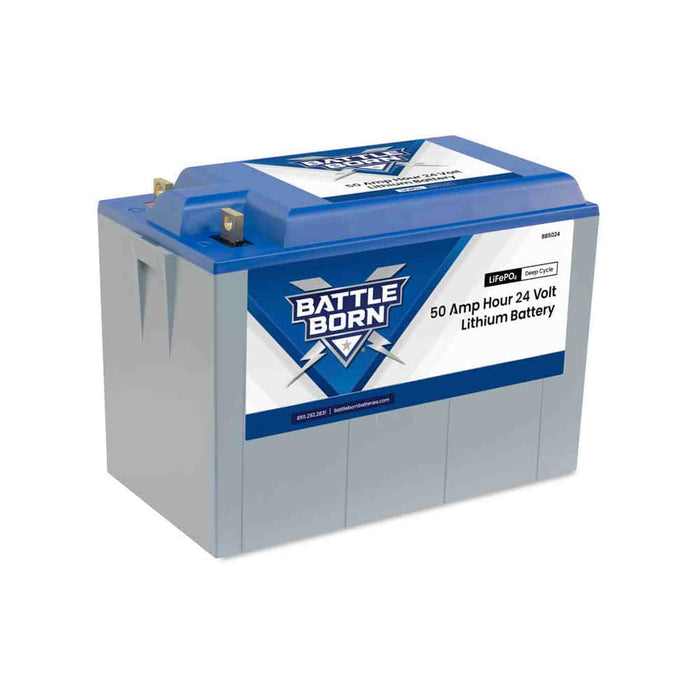
The Battle Born 24V 50Ah LiFePO4 Battery is a strong option here—offering drop-in replacement convenience, smart BMS protection, and long cycle life in a compact footprint.
For higher energy demands, such as sonar systems, marine electronics, or solar storage expansion:
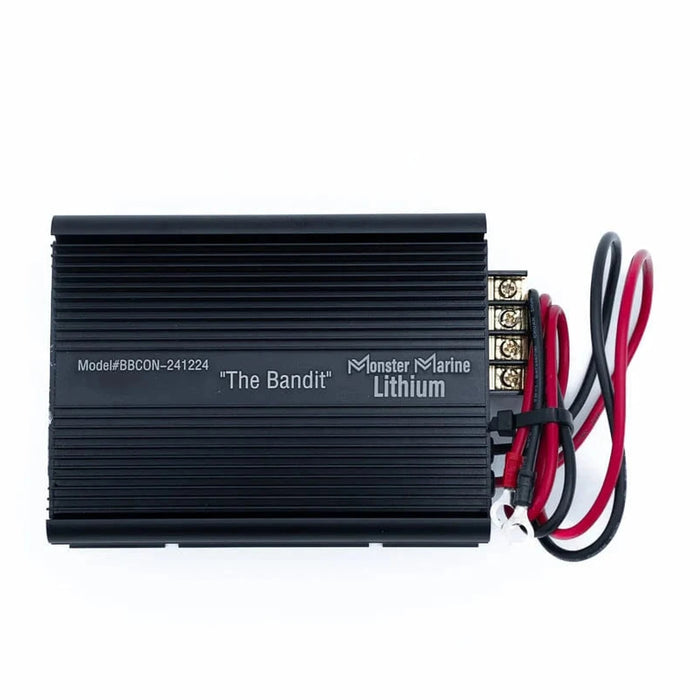
The Monster Marine Lithium 24V Converter "The Bandit" is especially useful. While not a battery itself, it ensures stable voltage delivery for sensitive electronics like live sonar systems by converting and regulating 24V input into clean, interference-free output.
For large energy storage setups requiring long runtime and high reliability, high-capacity lithium banks are essential.
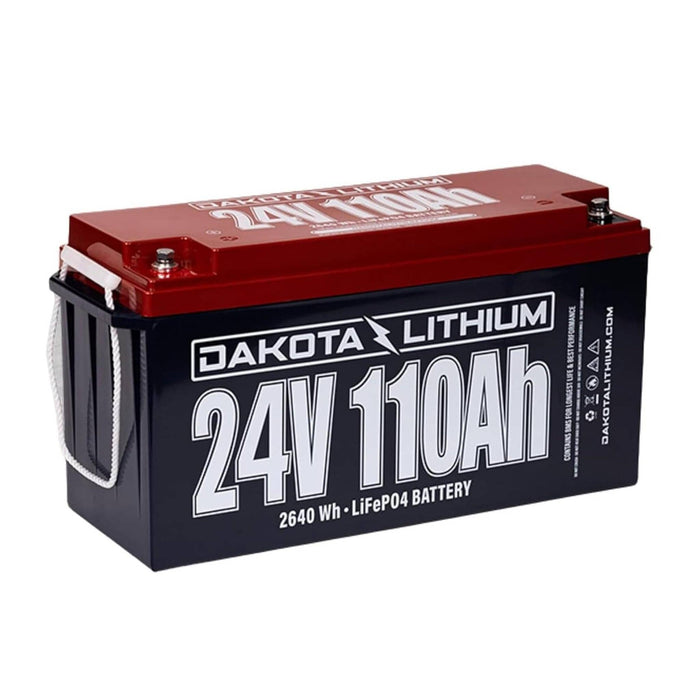
Systems like the Dakota Lithium 24V 110Ah Deep Cycle LiFePO4 Battery provide long cycle life, deep discharge capability, and rugged performance—making them ideal for solar, RV, and off-grid applications where consistent voltage stability is critical.
| Feature | Lithium-Ion | LiFePO4 | Lead Acid |
|---|---|---|---|
| Lifespan | Medium | Long | Short |
| Efficiency | High | Very High | Moderate |
| Depth of Discharge | 80–90% | 90–95% | ~50% |
| Maintenance | None | None | Required |
| Voltage Stability | Medium | High | Low |
Here’s how to get the most accurate and useful insights from your voltage readings:

Your battery type affects how you manage and interpret voltage. Here’s a quick breakdown:
Using the correct 24V battery voltage chart for your battery type ensures accurate monitoring and better overall performance.
Understanding your 24V battery voltage chart is essential for maintaining system health and maximizing performance.
Whether you're running a small RV setup or a large off-grid solar system, pairing accurate voltage monitoring with the right battery ensures:
At Solar Guys Pro, we help you not only understand your system - but build it with confidence using proven energy solutions.
Leave a comment